


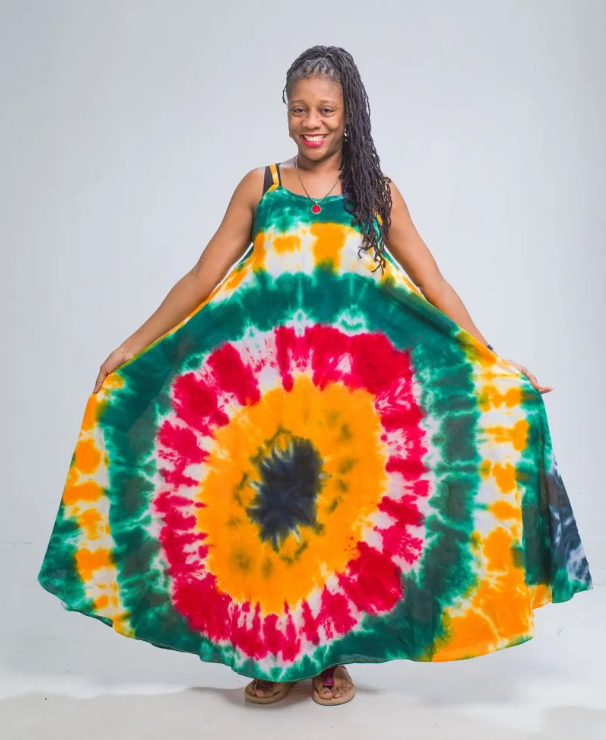
Charmaine Brown already knew how to sew.
She had studied garment construction at HEART, invested in equipment and spent more than 15 years building Jessica’s Fashion. What came next in her development was an opportunity to expand what she could create and how that creativity could work in business.
Through the Jamaica Business Development Corporation (JBDC) Fashion Incubator, Brown accessed textile-development training, product assessment, technical expertise and opportunities to take her products to market.
Her experience is one example of the work happening at in JBDC’s fashion development ecosystem where technical expertise, product development and market access come together around the entrepreneur. Once could call it ‘The Fashion Place’.
Brown was among an early cohort exposed to Nigerian textile experts through JBDC training in Adire, a traditional resist-dyeing technique. The intervention also created opportunities for participants to showcase their work to the public and prospective industry partners.
Brown had experimented with dyeing before, but the training expanded the possibilities.

“You could go and do your own material, you can do your stamping, you can make your own print,” she said. “That was just another new dimension of sewing.”
She took those techniques back into Jessica’s Fashion, developing textiles and turning them into finished garments. Some of those products have since made their way into retail.
But learning a technique and consistently producing for a market are two different things. JBDC Fashion Designer Robert Hall has watched Brown make that transition.
“I think what I’m impressed with, what I’m happy with is really the kind of growth that we have seen in moving beyond just, let’s say, learning a skill or learning how to do the printing to really now operating it in a business environment,” Hall said.
Supplying a market introduces demands that go beyond producing a beautiful garment. There is quality to maintain, colours to reproduce and motifs to position consistently. With hand-dyed textiles, even achieving the same colour repeatedly requires technical knowledge.
“Matching colours is a skill that you have to develop,” Hall explained. For him, Brown’s growth is evident in her movement from creating primarily for herself towards using those skills to respond to market demand.
Her interaction with JBDC has also extended beyond training. Brown has consulted with the Corporation’s fashion and product-development personnel and had products assessed for their suitability for retail. She is now a supplier to the Things Jamaican store.
That represents a significant change from the early years of Jessica’s Fashion. “When I just started, it was just single orders,” Brown recalled.
Today, she supplies products for retail while continuing to serve individual customers. Demand for her Jamaican-inspired pieces increases around periods such as Emancipation and Independence, and customers who encounter her work also contact her directly for pieces.

This progression illustrates the wider purpose behind the JBDC’s Fashion Incubator.
For Hall, developing a fashion entrepreneur means being able to work across the product-development process, from fabrication and fabric selection to pattern-making, sizing and finishing, while never losing sight of the business behind the product.
Fashion may be visual and creative, but every design also has to contend with cost. “You constantly have to be balancing costs,” Hall said. “What’s the final price going to be? Is that something that the market is going to be able to manage?”
The challenge is helping the entrepreneur preserve the strength of an idea while developing something that can be produced, priced and sold sustainably. “How do you balance your initial ideation to really whittle it down into a product that actually works?” Hall asked.
It is why Hall considers JBDC’s people among its greatest resources. Their technical backgrounds, industry exposure and interaction with the market allow them to consider the creative, technical and commercial sides of fashion together.
Brown did not arrive at JBDC needing to be taught how to sew. She arrived with years of experience. The intervention gave her somewhere to go next: new textile-development skills, technical guidance, product assessment and another route to market.
Even after more than 15 years in fashion, she considers development an ongoing process. “In this industry, you continue learning,” Brown said.
Creativity may start the journey. The JBDC’s Fashion Incubator is the place that moves it forward. If Charmaine Brown’s journey looks anything like yours, visit www.jbdc.net to become a part of an institution that strengthens your skill into business. Come to ‘The Fashion Place’.


