


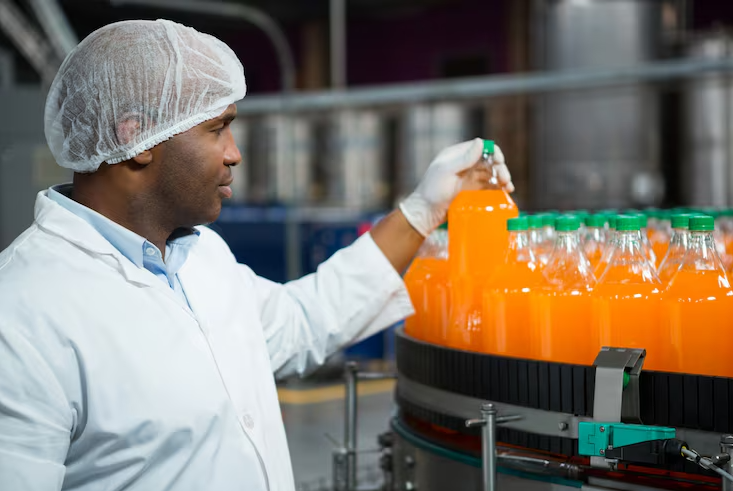
Jamaican Sunday dinner is incomplete without a cold glass of blended juice on the side. Using produce like carrot, pineapple, ginger and beetroot to make beverages is a part of the Jamaican culture and has long found its way into business.
Today, that business is evolving. Beverage entrepreneurs are moving beyond traditional fruit juices into wellness drinks, fermented beverages, flavoured coffees, plant-based alternatives and innovative products made from ingredients not traditionally associated with drinks.
The Entrepreneur Weekly stirs Jamaica’s beverage industry and how Agro-processors can bottle success.
More agro-processors are transitioning from small kitchen operations into commercial production, driven by growing consumer demand and the need for products that can compete in supermarkets, hotels and export markets.
SWEET OPPORTUNITIES
Colin Porter, Manager of Technical Services at the Jamaica Business Development Corporation’s (JBDC) Incubator & Resource Centre (IRC) has observed that health-conscious consumers are increasingly seeking products with less sugar, natural ingredients and functional benefits. Porter believes this trend coupled with the Sugar Consumption Tax (SCT) on non-alcoholic sweetened beverages at a rate of 22 cents per gram of added sugar, will continue to grow.
“We’re seeing persons moving, as usual, natural juices, juices with a natural base, natural flavouring, has always been something popular,” he said. “But I’m sure this will be growing a lot, especially since the government announced the sugar tax – is that you’re going to have more beverages which are, if not sugar-free, less sugar, are using other natural sweeteners that doesn’t equate to the same amount of sugar in a beverage.”
Fermented beverages, vegan-friendly drinks and flavoured alcoholic beverages are also growing segments within the market. Plant-based alternatives using soy, almond and other nut milks are creating opportunities for entrepreneurs to cater to changing lifestyles and dietary preferences.
Innovation is also expanding the range of ingredients being used in Jamaican beverages. While fruits like mango, carrot and pineapple remain staples, agro-processors are increasingly experimenting with vegetables and non-traditional inputs.
“We’ve seen a rise in green juices made from things like okra and lettuce and kale and cucumber,” Porter shared.
Traditional Jamaican products are also being reimagined for modern markets. Sorrel, once viewed mainly as a seasonal Christmas drink, is now appearing in commercial products such as sorrel liqueurs, punches and specialty beverages.
“We’ve moved from having sorrel as a Christmas drink or made at home to people making sorrel liqueurs and different sorrel punches and stuff that they can consume,” Porter said.

THE DON’TS IN BEVERAGE PRODUCTION
For many small producers, however, scaling a beverage business is not as simple as making larger batches. According to Porter, one of the biggest misconceptions among beverage producers is that scaling up production is only a matter of multiplying ingredients.
“Formulation and scaling up requires a precise calculation, rather than just straight arithmetic multiplication,” Porter explained.
A beverage that works in a small batch may not maintain the same taste, texture or stability when produced commercially. Maintaining consistency while increasing production volumes requires technical adjustments, proper formulation and controlled processing conditions.
Porter noted that packaging and labelling are also common problem areas for small beverage producers. “And that is a mistake, really, because you should declare everything on your label, because someone may be allergic, or have some adverse medical reaction to a particular ingredient,” he said.
Proper sanitisation and food safety practices are equally important. Producers must ensure bottles are sanitised before filling, products are properly sealed and shelf life is accurately determined to maintain freshness and safety.
THE DO: JBDC AGRO-PROCESSING INCUBATOR
Through the JBDC’s Agro-Processing Incubator, entrepreneurs are able to access commercial production facilities and technical guidance to help refine and scale their products. The incubator has supported a range of beverage producers, including businesses creating rum creams, sorrel beverages, herbal tonics and specialty fruit-based drinks.
Porter pointed to one rum cream producer, Smith’s Rum Cream, as an example of how small businesses can use the Incubator to enter markets traditionally dominated by larger companies by developing products that target different consumer segments rather than simply copying what already exists.
Brands like: I’m Jaz, Jah Jireh, Fimi Drink, K’s Fruit Desserts, Nutsie’s Treats also use the Agro-processing Incubator for commercial production.
Beyond production space, the incubator also supports entrepreneurs in improving formulation, product stability and regulatory compliance to help products meet industry standards.
To book the Agro-processing Incubator, visit https://www.jbdc.net/services/incubators/.
Additionally, the JBDC recently launched the Strengthening the Competitiveness and Resilience of MSMEs in Jamaica’s Agro-Industrial Value Chains project managed by the United Nations Industrial Development Organization (UNIDO) and sponsored by Japan. Through this collaboration, selected enterprises within the Agro-processing Industry will receive capacity building support focused on technology transfer which will introduce modern technologies that enhance production and processing capabilities, as well as technical capacity development through training, knowledge sharing, and tailored advisory services designed to improve productivity, product quality, and market readiness.
Apply now as boost your business! Applications are open until May 15, 2026 at: https://www.jbdc.net/services/projects/.


