

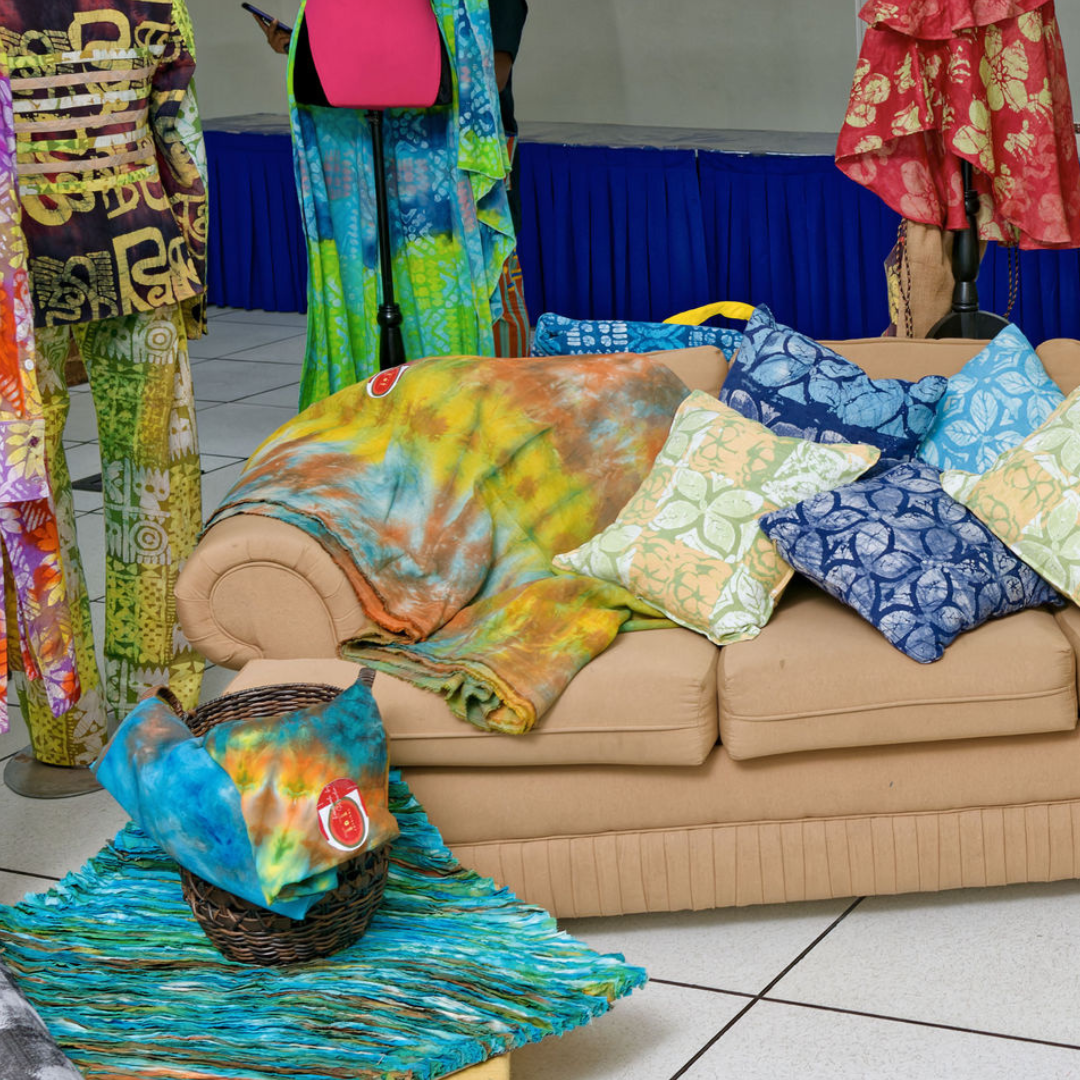
Pillowcases may not be the first thing that comes to mind when you think of local craft, but a lot can happen with fabric, imagination and the right technique. This week, the product development specialists at the Jamaica Business Development Corporation’s (JBDC) Craft Incubator used the batik technique to transform fabric into a decorative pillowcase fit for the home in the Craft Reimagined series.
What is Batik?
Batik is a resist-dyeing technique in which wax is applied to selected areas of fabric before it is dyed. The wax prevents the dye from penetrating those areas, allowing the maker to create patterns and designs across the textile.
The process can be repeated with different colours and designs, giving the maker room to experiment with patterns, contrast and composition.
But the technique is only part of the equation.
Think like an Entrepreneur
Earlier in the Craft Reimagined series, we explored the importance of developing a mood board before beginning production. Once the colours, textures, materials and overall feeling of a collection have been established, those decisions can guide the development of individual pieces.
A batik pillowcase, for example, does not have to exist on its own. Its colours or patterns could connect with other pieces in a home collection. Could this become a coordinated set? What other products could complement it? Could the same design language be adapted rather than simply repeated?
That shift from making an individual item to thinking about products as part of a collection can create more possibilities for the entrepreneur and the customer.
A textile technique can become the starting point for developing a range of functional products. The same thinking can inspire an entrepreneur to explore how original textiles could be incorporated into table linens, fashion accessories, soft furnishings, gifting solutions and other products.
The objective is not simply to put a print on something. The technique, design and final product should work together.
For the pillowcase, this means considering more than the batik pattern. The colours, placement of the design, fabric, size, construction and finishing all contribute to whether the final piece works as a product.
It also has to make sense within the wider collection.

Craft Reimagined
Innovation in craft does not always mean inventing a completely new technique.
Sometimes it is looking at a skill, material or process you already know and asking a different question: What else could this become?
That is the thinking behind Craft Reimagined.
Through JBDC’s Craft Incubator at 76 Marcus Garvey Drive, Kingston, entrepreneurs can access services like Product Development Support as they experiment with ideas, develop prototypes and refine products. The facility also provides textile printing and de-waxing equipment, along with tools and resources supporting other areas of creative production. For someone with an idea but unsure how to develop it, it could mean getting the technical guidance needed to take the next step. Book the space today to start creating for just $1200 daily at www.jbdc.net.
What will we reimagine next? Stay tuned to our social media @jbdcjamaica on Instagram, TikTok, Facebook, X, LinkedIn, and YouTube.


