


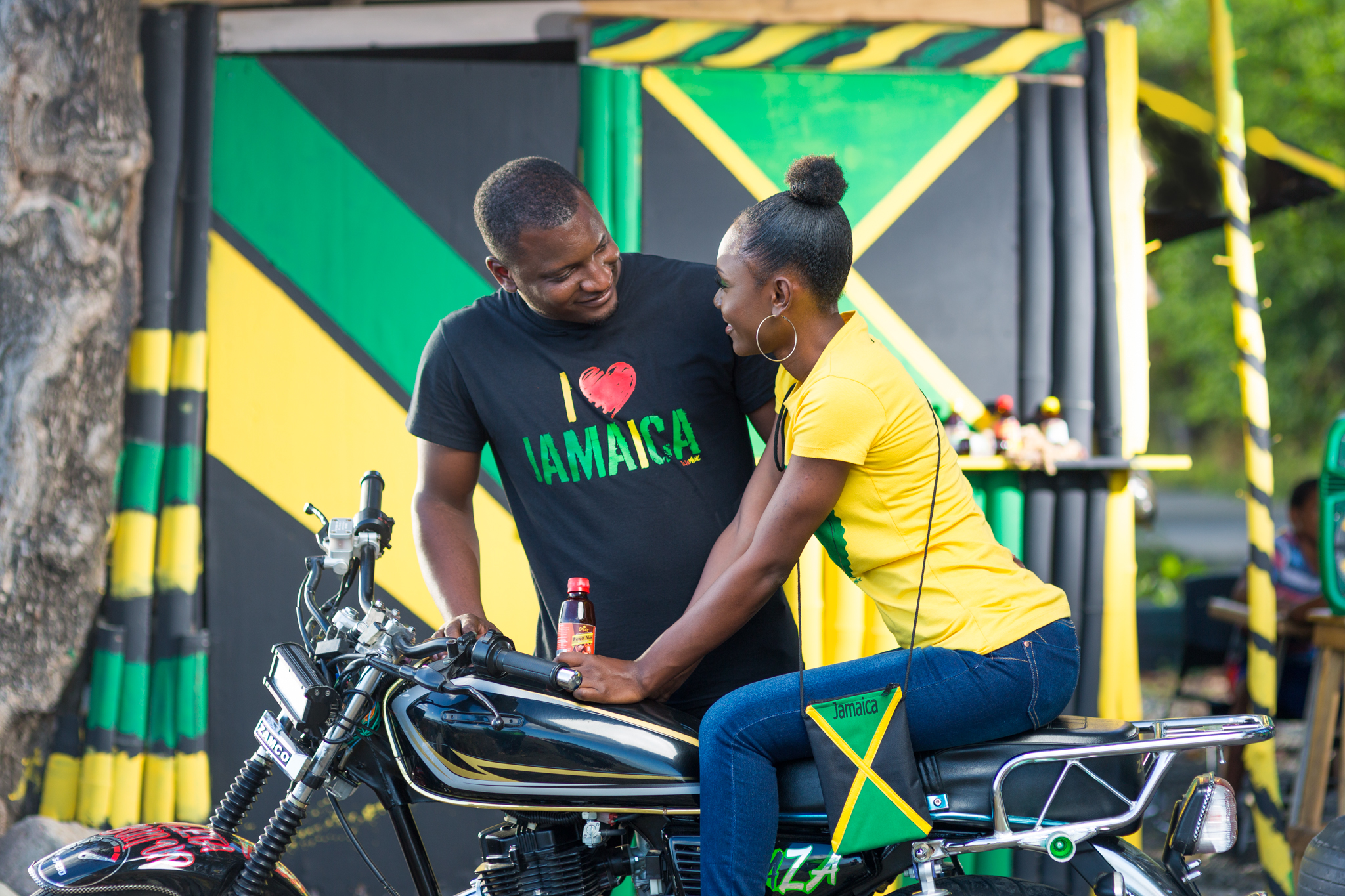
Black, green and gold. Put the three colours together and there is little doubt about the country they represent. Since Independence, the colours of the Jamaican flag have become an unmistakable part of our national identity. We fly them, decorate with them and, perhaps most visibly, wear them.
Every August, black, green and gold take over the streets as Jamaicans celebrate Independence. They emerge again when our sportsmen and sportswomen compete on the world stage and supporters represent in t-shirts, dresses, jewellery, accessories and other fashion pieces worn both at home and across the diaspora.
But how did the colours of our flag become a fashion statement?
It Started with the Flag.
When Jamaica gained Independence on August 6, 1962, the Union Jack was lowered and, for the first time, the Jamaican flag was raised over an independent nation. The black, green and gold flag gave the new nation its own visual identity.
At the time, the meaning of the colours was summed up in the phrase, “Hardships there are but the land is green and the sun shineth.” Black represented the hardships faced by the Jamaican people, green the land and hope, while gold represented the country’s natural wealth and sunshine. (JIS)
Over time, however, the colours would come to represent much more than their individual meanings. Fashion became one of the ways Jamaicans expressed that identity.
Jamaica Business Development Corporation (JBDC) Fashion Designer, Robert Hall points to the country’s Festival tradition as one of the spaces where fashion and national identity came together.
Festival Fashion accompanied the Independence season, giving designers an opportunity to create their own interpretations of Jamaica through clothing.

“People would come up with their different interpretations of whatever the theme was,” Hall recalled, noting that the designs often incorporated “the black, green and gold” and other Jamaican imagery.
As Jamaica’s influence grew beyond its shores, so too did the significance of those colours.
“One of the challenges with living in Jamaica is that we don’t understand how large the imagination of Jamaica is worldwide,” Hall said.
For a small island, Jamaica has managed to build an identity that is recognised almost anywhere in the world.
Reggae has played a major role. So have our athletes, food, language and culture. Together, they have created an image of Jamaica that stretches far beyond the country’s borders.
“We really don’t realise how strong the brand is internationally and what it represents, you know, and how it reads,” Hall said.
The flag itself helps.
Its black, green and gold colour combination and distinctive design make it easily identifiable. But Hall believes the recognition goes deeper than the flag.
“It may help, you know, in terms of differentiation, but I think the bigger thing is that like literally people have had a great brand experience,” he explained.
In other words, people recognise the colours because they recognise Jamaica and what the country has come to represent.
The 2008 Gold Rush
That relationship between national pride and fashion became particularly visible during major sporting moments. Hall points to the 2008 Beijing Olympics as one of them.

Jamaica dominated on the track, winning 11 medals, including 6 gold. Usain Bolt broke world records in the 100m and 200m, and Jamaica’s athletes commanded international attention.
Hall remembers what he calls the “2008 gold rush” as a period when wearing the national colours took on renewed significance. “People now want to show their patriotism within the context of that. And so all of a sudden…there was now resurgence of popularity in terms of…the wearing…of the black, green and gold,” he said.
It is something we still see today.
When Jamaica competes, particularly on the track, the colours come out. The same happens during the Independence season and at events such as the Grand Gala, which Hall also credits with providing another space for Jamaicans to visibly express national pride.
But somewhere along the way, black, green and gold stopped being colours Jamaicans pulled out only for special occasions.
They became fashion. And this is perhaps where the story is changing again.
More Than Black, Green and Gold
To “wear Jamaica” today does not necessarily mean dressing from head to toe in the national colours or wearing a Jamaican flag across your chest.
Jamaican designers are increasingly interpreting the country through their own creativity — its colours, culture, language, materials and personality — and producing pieces that can be incorporated into an everyday wardrobe.
Hall believes Jamaican designers have something that cannot easily be replicated. “I think our natural creative sensibility. We really depend on, you know, that natural Jamaican audacity, hence that comes off in the actual, the actual design,” he said.
There has also been a shift in how Jamaicans view what is produced at home. “There is a time when things local were not seen as being of any kind of value,” Hall said.
He believes that is changing as Jamaicans become more willing to embrace what is ours.
“People are beginning to recognise their power, aka recognise the strength of this brand. And instead of trying to wait on somebody else to come and do it, people are now, you know, basically willing to get up and own basically who it is that they are.”
It’s always in style to ‘Wear Jamaica’. Visit www.thingsjamaicanshopping.com to see how.


