

February is one of the significant periods when Black people purposefully reflect on how far they have come. Celebrated as Black History Month, the Entrepreneur Weekly is taking the time to reflect on how far black entrepreneurship has come – from subsistence to the back bone of the Jamaican economy. Micro, Small & Medium-sized Enterprises (MSMEs) account for more than 90% of the business sector, many of whom are Black.
Many prominent names come to mind when one thinks of Jamaican entrepreneurs. But did how they get here?
Let’s take a walk back in history. We are in post-emancipation Jamaica, 1838. This represents the end of over 150 years of brutal enslavement of people of African descent in Jamaica. The sugar industry once the engine of the West Indies, slowing begun to decline.
With this newfound freedom, came an increasing desire among ex-slaves to purchase land and pursue economic independence. Free Villages like Sligoville, were an opportunity for freed people to establish a peasant economy, but faced high taxes, land shortages, and, in some cases, forced tenancy.
Land ownership marked a turning point. With it came the rise of peasant farming, small-scale trade and the early foundations of Black enterprise. Freed people began cultivating crops for sale, participating in local markets and creating livelihoods that extended beyond subsistence.
These efforts represented the first steps in a long journey from survival to structured entrepreneurship. This was the foundation of entrepreneurship in Jamaica.
FROM PEASANTRY TO POSSIBILITY
As peasant farming and small-scale trade expanded, some Black Jamaicans began to move beyond subsistence and into accumulation. By the late 19th century, a small but growing class of Black entrepreneurs had emerged, operating within a society still shaped by colonial inequality.
That late 19th century economic environment almost mirrors today. Instead of colonial inequality, MSMEs today face access to finance, regulatory barriers, and increased competition from ‘Big’ businesses.
But still they rise.
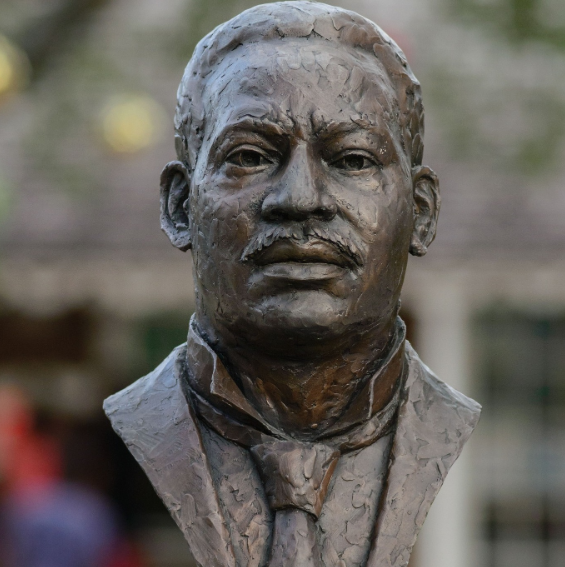
One of the most prominent figures of the 19th century era was George Stiebel, widely recognised as Jamaica’s first Black millionaire. A skilled carpenter and shipwright, Stiebel built his fortune through gold mining ventures in South America before returning home to invest in Jamaica. His construction of Devon House in 1881 stood as a powerful statement of Black wealth and ambition at a time when economic power was largely concentrated elsewhere.
Stiebel’s success was significant not simply because of his wealth, but because it challenged prevailing assumptions about who could own, build and prosper in colonial Jamaica. His legacy reflected what was possible when opportunity and determination converged, even within a restrictive system.
The early 20th century brought gradual shifts. Urbanisation, education and migration created new avenues for economic participation. Black Jamaicans increasingly entered commercial spaces as shop owners, service providers and small manufacturers, laying the groundwork for a more diversified business class.
Jamaica’s Independence in 1962 signalled a gradual shift in economic participation and ownership. As the country redefined itself, questions of who controlled business, industry and opportunity moved to the forefront.
Education expanded and a new generation of professionals and business owners began to emerge. Entrepreneurship became both a pathway to upward mobility and a response to limited formal employment.
While challenges such as limited access to financing and foreign competition persisted, post-Independence Jamaica laid the foundation for the modern MSME sector. Entrepreneurship evolved from subsistence and became a key pillar of national development.

HISTORY MATTERS
Today’s MSMEs are benefitting from a foundation of the people before us. Though they existed in an environment that was restrictive, innovation and vision paved the way to a Jamaican economy that is dynamic and fruitful.
Many of today’s MSMEs continue to face challenges that echo the past, limited access to financing, gaps in formalisation, land ownership constraints and uneven market access.
What has changed is not the struggle, but the systems now available to help entrepreneurs navigate it. As the agency mandated to support MSME development, the Jamaica Business Development Corporation (JBDC) continues this legacy by helping entrepreneurs move ‘from concept to market’.
Through business advisory services, product development support, market access and enterprise support, the organisation strengthens the foundations that allow businesses to grow.
Today’s entrepreneurs are part of a continuum that began with land, skill and determination and continues with innovation, strategy and vision. And as long as Jamaican entrepreneurs continue to build, inspired by the past and supported in the present, the story remains unfinished. Visit the JBDC at www.jbdc.net and begin to write your own entrepreneurship success story.
REGISTER NOW!


